

Introduction
Technology has become the heartbeat of the modern workplace, driving efficiency, flexibility, and connection across organizations. From AI and automation solutions to workplace management platforms and cloud-based systems, digital tools are reshaping how teams collaborate, use office space, and stay engaged. As hybrid work becomes the default model, technology plays a critical role in connecting people, spaces, and data to support productivity and flexibility. At the same time, the future of work is increasingly human-centered, with emotional intelligence, inclusivity, and sustainability emerging as defining factors of workplace success. Together, these forces signal a new era of data-driven, adaptable, and people-focused workplaces.
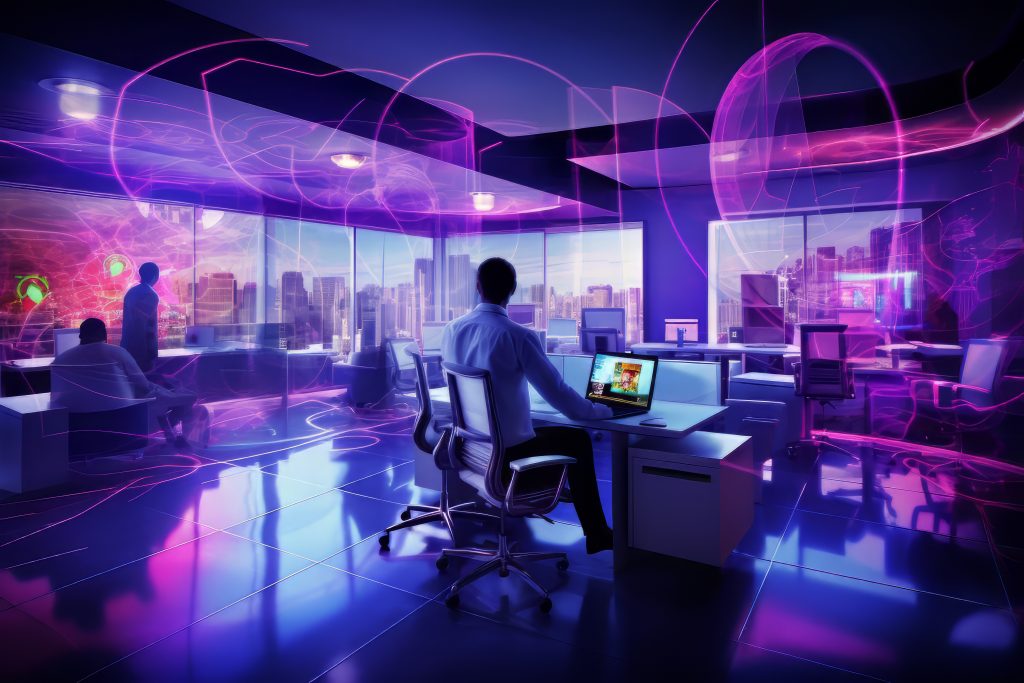
The status quo: How technology is shaping the modern workplace
Technology has evolved into the foundation of the modern workplace, actively influencing how teams collaborate, manage space, and remain productive. From AI and automation to cloud-based systems and IoT sensors, digital tools are transforming daily operations into smarter, data-driven workflows and processes. In fact, 91% of businesses plan to increase investment in tech-enabled offices, reflecting how critical these tools have become for efficiency, flexibility, and employee engagement in the age of hybrid work.
What are the latest trends in digital workplace technology?
From AI, automation, and hybrid work solutions to immersive learning platforms and smart office systems, workplace technology is redefining our approach to productivity, flexibility, and employee well-being. As organizations navigate digital transformation, trends such as AI-powered efficiency, cybersecurity resilience, and human-centered design are paving the way for a new era of smarter, more inclusive workplaces.
1. AI makes the four-day workweek more achievable
According to industry research, 93% of senior leaders at organizations that have deeply integrated AI into their operations are either exploring or have already implemented a four-day workweek. AI increases efficiency by automating repetitive tasks, enabling employees to accomplish more work in less time, thereby supporting shorter workweeks that are both realistic and productive.
2. Mobile technology enables true workplace flexibility
Mobile computing has freed employees from traditional offices, enabling real-time collaboration from anywhere, which represents a major shift supporting diverse working styles and improving work-life balance. The ability to access work systems and data through any device has driven a cultural move toward workplace flexibility while enhancing job satisfaction for today’s workforce.

3. Collaboration and cloud tools supercharge teamwork
Cloud platforms and collaboration solutions have become the backbone of hybrid teamwork. They centralize communication, streamline workflows, and keep teams aligned across locations. Real-time updates and shared access to resources remove silos, accelerating decision-making and improving project efficiency.
4. AI enhances satisfaction and productivity
AI-powered tools are increasing engagement and efficiency by handling routine tasks. Employees can now concentrate on creative and strategic work, improving both job satisfaction and output. As AI adoption grows, its role in shaping smarter, more human-focused workplaces will continue to expand. When surveyed, 64% of workers said that access to AI workplace tools would increase their productivity.
5. Cybersecurity challenges grow with digital transformation
As organizations depend on increasingly interconnected systems, cybersecurity risks are escalating. IT teams must remain alert and ensure that security is embedded into every layer of the organization’s digital infrastructure. Proactive threat detection, continuous updates, and employee awareness are now essential for protecting sensitive information.
6. e-Learning drives continuous skill development
Electronic Learning and Development (e-L&D) platforms have made training more accessible and customized. Employees can upskill anytime and anywhere through self-paced programs that align with their individual goals. This flexibility promotes lifelong learning and supports adaptability in a rapidly evolving job environment.
7. Digital inclusion strengthens workplace diversity
Workplace technology has become a powerful driver of Diversity, Equity, and Inclusion (DEI). Remote work solutions and adaptive technologies enable participation from employees with disabilities or those in remote areas, ensuring everyone can engage in the professional landscape and contribute without limitations, regardless of location or personal circumstances.

8. Technology reshapes work-life balance
Digital tools have enhanced workplace flexibility but also blurred the boundary between work and personal life. While technology enables remote work and autonomy, constant connectivity can contribute to employee burnout. The challenge ahead lies in using technology to support balance, not undermine it.
9. Leadership evolves in the digital era
The rise of modern workplace technologies requires a new style of leadership. In today’s environment, managers must be digitally capable, adaptable, and empathetic to effectively guide teams through ongoing change. Strong digital leadership helps cultivate innovation, trust, and resilience in technology-driven organizations.
10. Hybrid work tools make flexibility seamless
From desk reservation platforms to project management systems and communication applications, hybrid work tools have been essential in adopting more flexible working arrangements, bridging the gap between remote and on-site environments. They enable employees to plan schedules, reserve spaces, and stay connected, supporting both independence and collaboration.
11. The “always-on” culture challenges mental health
Technology has also encouraged unhealthy behaviours such as constant availability and digital overload. The expectation to respond instantly to emails, messages, and requests can result in stress and burnout. Establishing healthier digital habits and encouraging mindful disconnection are critical to safeguarding employee well-being.

12. Immersive tech will redefine how we learn and collaborate
Augmented, Mixed, and Virtual Reality (AR, MR, VR) are transforming how employees interact and learn. From immersive training programs to virtual brainstorming sessions, these tools connect physical and digital environments and enable deeper collaboration and practical skill development, regardless of location.
13. The metaverse will revolutionize learning and remote teamwork
The metaverse is expected to transform work by creating immersive, interactive environments that enhance e-learning and development (e-L&D) and virtual collaboration. It will allow employees to learn through vivid, hands-on experiences that mirror real-world scenarios, improving skill development and engagement. In terms of teamwork, the metaverse will push beyond the limits of current digital communication tools.
14. Automation and AI will reshape the job market
Industry forecasts estimate that 85% of jobs in 2030 have not yet been created, reflecting a major shift driven by automation, AI, and robotics. These technologies are expected to redefine the job landscape, replacing certain roles while simultaneously creating new ones. As automation handles routine tasks, new positions will emerge, particularly those requiring complex problem-solving, critical thinking, and creative abilities, skills that machines cannot replicate. This points to a new era of human-centered job opportunities and the need for adaptable skill sets.
15. Emotional intelligence will define the future of work
As machines and algorithms take over technical and repetitive tasks, human-centered qualities such as creativity, adaptability, collaboration, and empathy become essential. Employees will need to apply these skills to support critical thinking, effective communication, and provide a human touch that technology cannot replace. This will make emotional intelligence a key determinant of professional success in a technology-driven landscape.

Conclusion
As workplace technology continues to evolve, its impact extends far beyond efficiency gains and operational improvements. The trends shaping the future of work highlight a fundamental shift toward more flexible, inclusive, and human-centered organizations. While AI, automation, immersive technologies, and digital platforms will continue to redefine roles and workflows, long-term success will depend on how effectively organizations balance innovation with well-being, trust, and emotional intelligence. By embracing these trends thoughtfully, workplaces can create environments that not only adapt to change but also empower people to thrive in an increasingly digital world.